
The Ultimate Passionfruit Vine Guide for NZ Backyards
Growing Passionfruit NZ – Nothing says Kiwi summer quite like spooning fresh, tangy passionfruit pulp over a pavlova or into your morning smoothie. However, while they are incredibly popular, these tropical vines have a reputation for being notoriously finicky. They hate frost, despise strong winds, and are highly susceptible to root rot and fungal spots.
If you want to master growing passionfruit nz style, you need to understand their specific needs. In this guide, we will cover everything from finding the perfect spot in your garden to troubleshooting common problems.
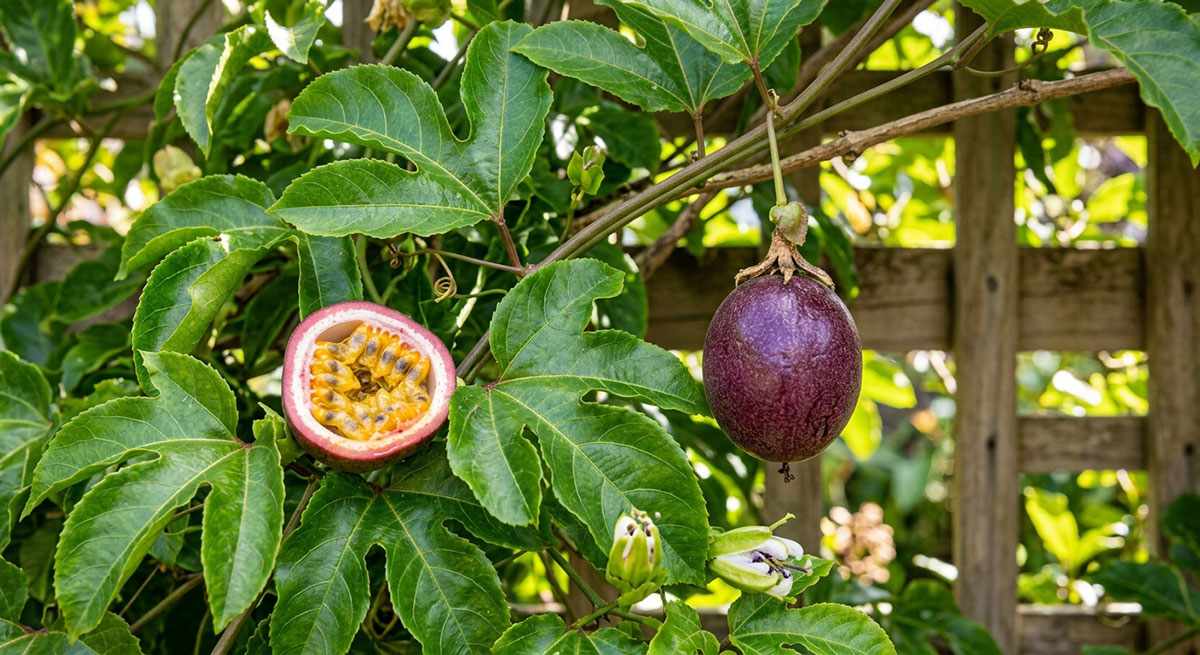
Location, Location, Location: The Best Place to Plant Passionfruit NZ
Passionfruit vines are subtropical, meaning they thrive on warmth and sunshine but will quickly sulk if exposed to the cold. Choosing the best place to plant passionfruit nz is the single most important step for a successful harvest.
- Sunlight and Warmth: Plant your vine against a north-facing fence, wall, or sturdy trellis. They need full sun (at least 6-8 hours a day) and the radiant heat from a fence will keep them warm overnight.
- Shelter from Wind: Strong winds will not only snap the brittle vines but also blow the flowers right off before they can be pollinated. Provide a sheltered environment.
- Frost Protection: Passionfruit are highly frost-tender, especially when young. If you live in a frost-prone area of New Zealand, you must cover the vine with frost cloth during winter for its first two years. Alternatively, consider planting in a large container that can be moved to a sheltered patio or glasshouse in winter.
- Drainage: They hate wet feet! Plant them in a raised mound or a raised garden bed with free-draining soil to prevent root rot.
Essential Passionfruit Vine Care NZ
To keep your vine vigorous and productive, routine passionfruit vine care NZ is required.
- Feeding: Passionfruit are incredibly heavy feeders. Feed them with a high-potassium fertiliser (like citrus or fruit tree food) in early spring and again in mid-summer. Top dress with compost and sheep pellets.
- Watering: They have a shallow root system, meaning they dry out quickly. Water deeply and regularly during the hot summer months, especially when the fruit is forming.
- Pruning: Passionfruit vines fruit on new season’s growth. Prune them back in early spring (September/October) once the risk of frost has passed. Cut back the sprawling, tangled branches by about a third to encourage fresh, fruit-bearing shoots and improve airflow.
The Best Passionfruit Varieties for New Zealand
Most passionfruit grown in New Zealand are the purple varieties, which are generally self-fertile (meaning you only need one plant). Here are the top picks for local conditions:
- Black Magic: The most common and popular variety in NZ. It produces large, dark purple fruit with intensely flavoured, aromatic pulp. It is a vigorous grower but requires good frost protection.
- Nellie Kelly (Grafted): This is a very popular option for southern or cooler climates. The fruiting vine is grafted onto a hardy blue passionflower rootstock, making it significantly more resistant to cold, root rot, and soil diseases.
- Vanilla Passionfruit: A different species altogether (Passiflora antioquiensis). It produces long, yellow/green fruit with an incredibly sweet, vanilla-like flavour and less tang. It is actually slightly more tolerant of cooler weather than the black varieties.
Passionfruit vine natural lifespan
A passionfruit vine typically has a natural lifespan of 3 to 7 years, with peak fruiting occurring during years 2 through 4.
Lifespan Breakdown: Years 1 to 2: The vine grows rapidly and starts producing its first harvest around 12 to 18 months after planting. Years 2 to 4: This is your window for heavy fruit production. Years 5 to 7: The vine becomes woody, productivity slows down significantly, and the plant often dies of old age or becomes vulnerable to pests and disease.
Tips for Continuous Harvests.
Staggered planting: Plant a new vine every 2 to 3 years so you always have a young, productive plant ready when the old one declines.
Troubleshooting Common Problems
Dealing with Fungal Spot (Brown Spot)
In New Zealand’s humid areas (like Auckland and Northland), fungal diseases are a major headache. Brown spot causes brown, scabby lesions on the leaves and the fruit, eventually causing the fruit to shrivel and drop. To prevent this, ensure your vine is pruned for good airflow, and apply a copper fungicide spray in early spring before the flowers open.
Why is my passionfruit dropping fruit NZ?
It is heartbreaking to see little green fruits form, only to find them lying on the ground days later. If you are wondering, “why is my passionfruit dropping fruit nz?“, it is almost always caused by one of the following:
- Irregular Watering: If the vine dries out completely and is then suddenly flooded with water, it will panic and drop its fruit to survive. Keep the soil moisture consistent.
- Cold Snaps: A sudden drop in nighttime temperatures during late spring or summer can shock the plant into dropping unripened fruit.
- Poor Pollination: If the flowers aren’t fully pollinated by bees, the fruit will form slightly but then abort and fall off. You can help by hand-pollinating the flowers with a small, soft paintbrush.
- Passionvine Hoppers: These sap-sucking insects (often called “fluffy bums” in their nymph stage) drain the energy from the stems, causing the fruit to starve and drop. Control them with neem oil or a pyrethrum-based spray.