
Tamarillo Growing Guide for Beginners
The Tamarillo, historically known as the “tree tomato,” is a nostalgic favourite in many Kiwi backyards. Whether you scoop them fresh with a spoon, bake them, or boil them down into a rich winter chutney, a bumper crop is highly rewarding. However, mastering growing tamarillos nz style requires a bit of specific knowledge, as these subtropical beauties are fast-growing but famously fussy when it comes to cold weather and insects.
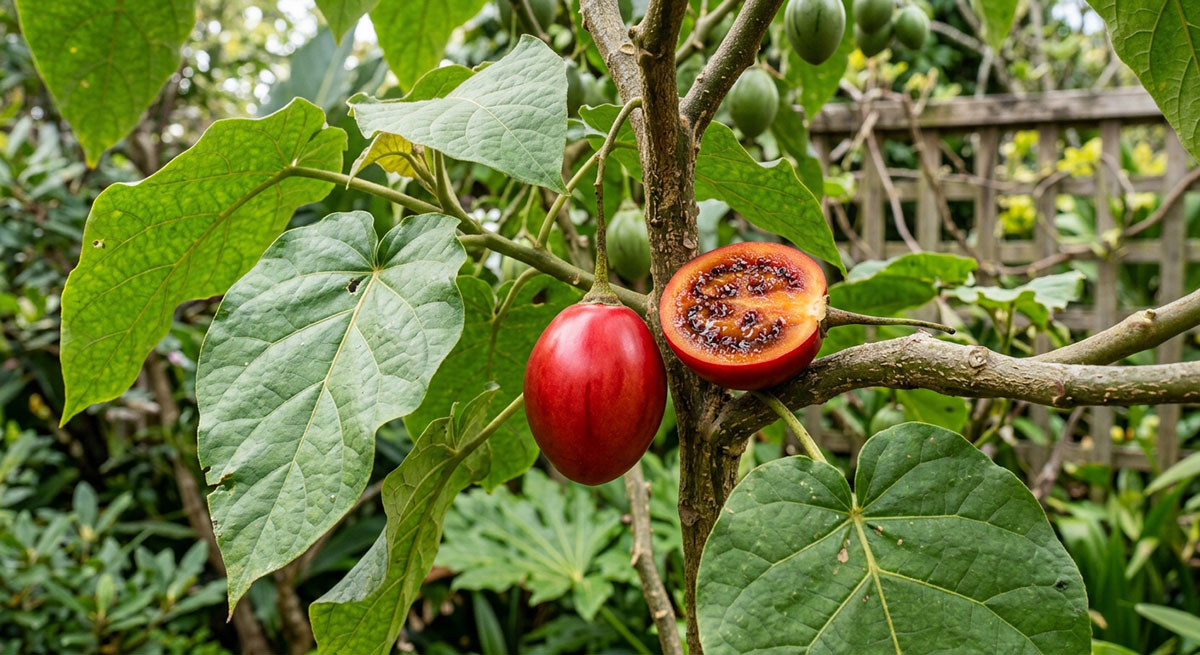
Choosing the Right Spot: Sun, Shelter, and Frost
Tamarillos are fast-growing, shallow-rooted trees with large, soft leaves. In ideal conditions, they can produce fruit within 18 months, but their structure and soft branches makes them vulnerable to breakages.
- Frost is the Enemy: Tamarillos are highly frost-tender. If you live in an area prone to harsh winter frosts, you must plant your tree against a warm, north-facing wall or under the eaves of your house. For the first two winters, covering the tree with frost cloth is essential.
- Wind Protection: Because their wood is soft and brittle, and their leaves act like sails, strong winds can snap branches clean off. Plant them in a sheltered location and ensure young trees are securely staked.
- Soil and Drainage: They demand excellent drainage. If their shallow roots sit in waterlogged winter soil, the tree will quickly succumb to root rot. Plant in a raised mound if you have heavy clay soil.
Essential Tamarillo Tree Care
Good tamarillo tree care revolves around regular feeding and consistent watering during the warmer months.
- Feeding: Tamarillos are hungry plants. Feed them in early spring and mid-summer with a high-potassium fertiliser (like a citrus or tomato food) to encourage flowering and fruit set. Top dress heavily with compost or sheep pellets to protect their shallow surface roots.
- Watering: Their large leaves transpire a lot of water. During dry Kiwi summers, deep and regular watering is vital. If they dry out, the leaves will dramatically droop, and the tree may drop its developing fruit.
The Best Tamarillo Varieties in New Zealand
When selecting a tree, the main choice comes down to the colour of the fruit, which dictates the sweetness:
- Ruby Red: The classic, commercial New Zealand standard. It produces dark red, slightly tart fruit with a bold, tangy flavour. Excellent for eating fresh (with a sprinkle of sugar) or making preserves.
- Mulligan (or Solid Gold): A yellow/amber variety that is significantly sweeter and less acidic than the red types. Perfect for those who find the red ones too sour.
- Laird’s Large: Known for producing exceptionally large, red fruit. A highly vigorous grower that yields fantastic crops if well protected from the wind.
How and When to Prune When Growing Tamarillos NZ
Because fruit only forms on new spring growth, correct tamarillo pruning nz is non-negotiable if you want a heavy crop. Furthermore, unpruned trees grow top-heavy and are prone to splitting in the wind.
Wait until the risk of frost has entirely passed (usually September or October) before pruning. Cut the main fruiting branches back by about a third to a half to stimulate fresh, bushy growth. If your tree has suffered minor frost damage over winter, wait until spring to prune away the dead, blackened tips—these actually protect the lower branches during the coldest months.
Life span
A Tamarillo tree typically lives for 5 to 12 years, although most home gardeners find they are most productive and reliable for about 4 to 7 years.
Key Lifespan Facts:
First fruit: Plants start producing fruit within 1.5 to 2 years from seed or cutting. Peak production: The tree reaches its highest fruit yield around 4 years of age. Decline: Because they have brittle, soft wood and shallow root systems, they are easily damaged by heavy winds, frosts, or diseases (like powdery mildew or viruses), causing them to slow down or die after several years.
Best Practices: Succession planting: Many gardeners plant a new Tamarillo every couple of years so that a young tree is ready to replace an older, declining one.
Dealing with Tamarillo Pests NZ
Unfortunately, the massive, soft leaves of the tamarillo are an absolute magnet for insects. Navigating tamarillo pests NZ is a common part of growing this tree.
- Whitefly: This is the most common nuisance. If you brush against the tree and a cloud of tiny white insects flies up, you have a whitefly infestation. They suck sap from the undersides of the leaves, eventually causing a sticky residue (honeydew) and black sooty mould. Control them early by hanging yellow sticky traps in the branches and spraying the undersides of the leaves with Neem oil or a pyrethrum-based spray every 7-10 days until clear.
- Tomato Potato Psyllid (TPP): This pest attacks plants in the nightshade family (which includes tamarillos). They inject a toxin that causes the leaves to pucker, yellow, and curl at the edges, severely stunting the plant’s growth. Neem oil applications in early spring can help manage the nymph stage.
- Aphids: Often found clustering on fresh spring growth. A firm blast from the hose or a spray of soapy water is usually enough to dislodge them.
With a sheltered, frost-free corner and a bit of vigilance against whiteflies, your tamarillo tree will quickly become one of the most productive—and delicious—features of your garden.