
Best Dwarf Fruit Trees for Small NZ Backyards
With modern housing sections in cities like Auckland and Christchurch getting progressively smaller, the classic quarter-acre Kiwi dream has evolved. But having a compact townhouse courtyard, a tight suburban boundary, or a sunny apartment balcony doesn’t mean you have to give up on growing your own food. The rising demand for container-friendly edibles has made dwarf fruit trees NZ a massive trend for modern-day gardeners.
These compact varieties deliver full-sized, delicious fruit on trees that have been specifically bred or grafted to stay small. If you are looking for small garden fruit trees NZ, here is the ultimate guide to selecting, planting, and caring for them in tight spaces.
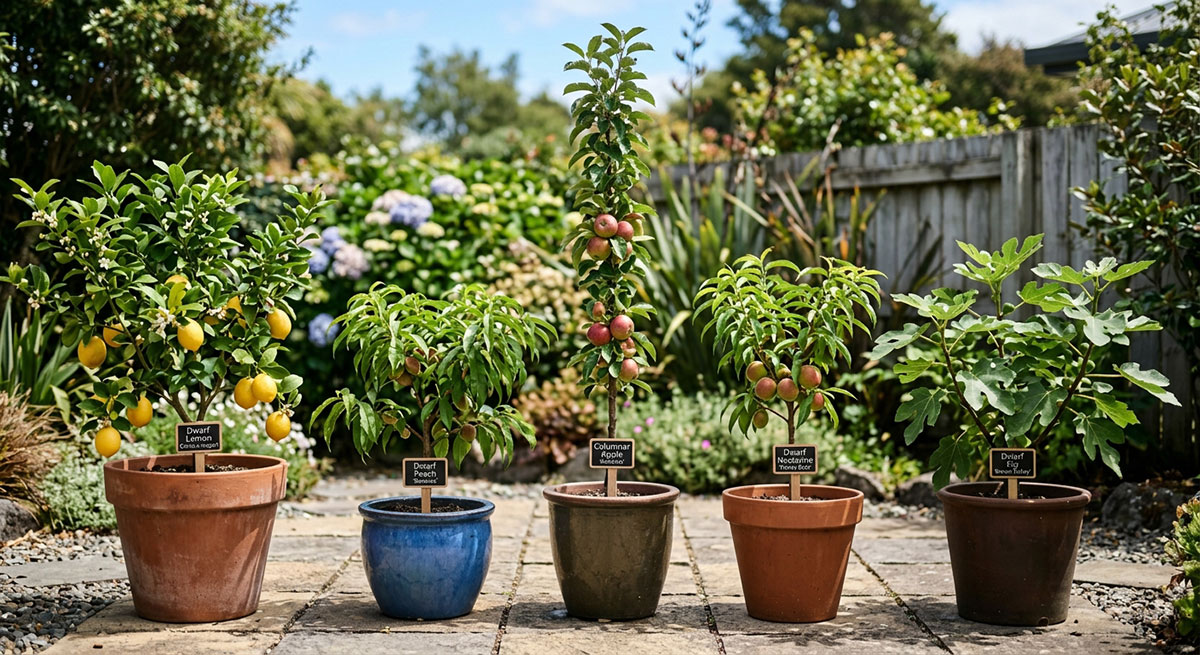
How Dwarf Fruit Trees Work
Most dwarf fruit trees aren’t naturally tiny. They are created by taking a cutting (scion) from a standard fruit tree (like a Gala apple or Meyer lemon) and grafting it onto a specific “dwarfing rootstock.” This rootstock acts as the engine of the plant, deliberately restricting the tree’s height and spread while still allowing it to produce regular-sized fruit. For example, citrus trees grafted onto Flying Dragon rootstock will typically max out at 1.5 to 2 metres tall, making them the ultimate patio fruit trees NZ.
The Best Fruit Trees for Pots NZ and Small Gardens
Not all fruit trees like being confined. Here are the most reliable performers for New Zealand’s temperate climates:
1. Dwarf Citrus (Lemons, Limes, and Mandarins)
Citrus trees are evergreen, look highly ornamental, and adapt perfectly to containers.
- Meyer Lemon (on Flying Dragon rootstock): The absolute essential for Kiwi backyards. It is sweeter, cold-hardier, and produces fruit almost year-round.
- Bearss Lime (Tahitian Lime): Needs a warm, frost-free spot, making a sun-drenched patio wall in Auckland or Tauranga ideal.
- Satsuma Mandarin (e.g., Silverhill or Miho): Fruits early in winter and stays beautifully compact.
2. Dwarf Peaches and Nectarines
These are genetic dwarfs, meaning they naturally grow into a dense, bushy shape (usually barely reaching 1.5 metres) without needing a dwarfing rootstock. They burst into stunning pink blossoms in early spring.
- Peach ‘Bonanza’ or ‘Pixzee’: Freestone peaches that produce incredibly sweet, full-sized yellow flesh fruit on a tiny tree.
- Nectarine ‘Nectar Babe’: A fantastic sweet red nectarine. Note: Nectar Babe requires a pollinator, so you will need a ‘Honey Babe’ peach or similar flowering variety nearby.
3. Dwarf and Columnar Apples
If you lack horizontal space, columnar apples are the perfect solution. They grow straight up like a pillar, developing short fruiting spurs close to the main trunk.
- Ballerina Apples (e.g., ‘Polka’ or ‘Bolero’): Can be planted just 60cm apart. They look spectacular lining a driveway or growing in narrow side-gardens.
- ‘Blush Babe’ Apple: A true dwarf apple that forms a small, bushy canopy and is highly disease-resistant, making it perfect for organic gardeners.
4. Figs
Figs (like ‘Brown Turkey’ or ‘French Sugar’) actually produce more fruit when their root systems are restricted. Planting a fig in a large pot on a hot concrete patio stops it from growing into a massive, unruly tree and forces it to focus its energy on ripening its sweet, jammy fruit.
Care Guide for Container and Small-Space Fruit Trees
Growing in pots or tight raised beds means your trees rely entirely on you for their survival. Follow these rules to keep them thriving:
- The Right Pot: Choose a half-wine barrel or a large pot with a minimum diameter of 40-50cm. It’s best to have a pot with sides that taper out towards the top, not tapering in towards the top, because the plant can become pot bound making it difficult to re-pot. Ensure it has multiple drainage holes. Elevating the pot on “pot feet” that can be bought or made from non de-composable materials. Prevents water from pooling underneath during wet winters.
- Soil Selection: Never use soil straight from the garden. It compacts in pots and suffocates the roots. Always use a premium, free-draining potting mix. For citrus, buy a specialized citrus and fruit tree mix.
- Watering: Pots dry out incredibly fast in the summer wind. You will likely need to water your patio trees every day during January and February. If the soil pulls away from the edge of the pot, the water might run straight down the sides—soak it thoroughly to rehydrate the mix.
- Feeding: Because watering flushes nutrients out of the potting mix, container trees are notoriously hungry. Apply a slow-release fruit tree fertiliser in early spring and top up with liquid seaweed or fish fertiliser every few weeks during the growing season.
- Repotting: Every 3 to 4 years, your tree may become root-bound. You will need to pull it out, trim back about a quarter of the outer roots, and repot it with fresh mix to rejuvenate it.
With careful variety selection and a good feeding schedule, you can easily turn a small courtyard or apartment balcony into a highly productive miniature orchard.