
How to Choose and Care for Tree Ferns (Ponga)
Native Tree Ferns NZ – Replicating the dense, lush feel of the New Zealand native bush in a suburban backyard is a popular landscaping goal. Central to this look is the iconic ponga. However, a common and fatal mistake many gardeners make is buying a beautiful, mature tree fern and planting it in the middle of a lawn in full, dry sun. Without the protective canopy of taller trees, these woodland natives quickly scorch, dry out, and die.
Mastering ponga tree care nz requires understanding how these unique plants function. They are not like regular trees; their trunks are actually a dense mass of aerial roots that need constant environmental moisture to survive.
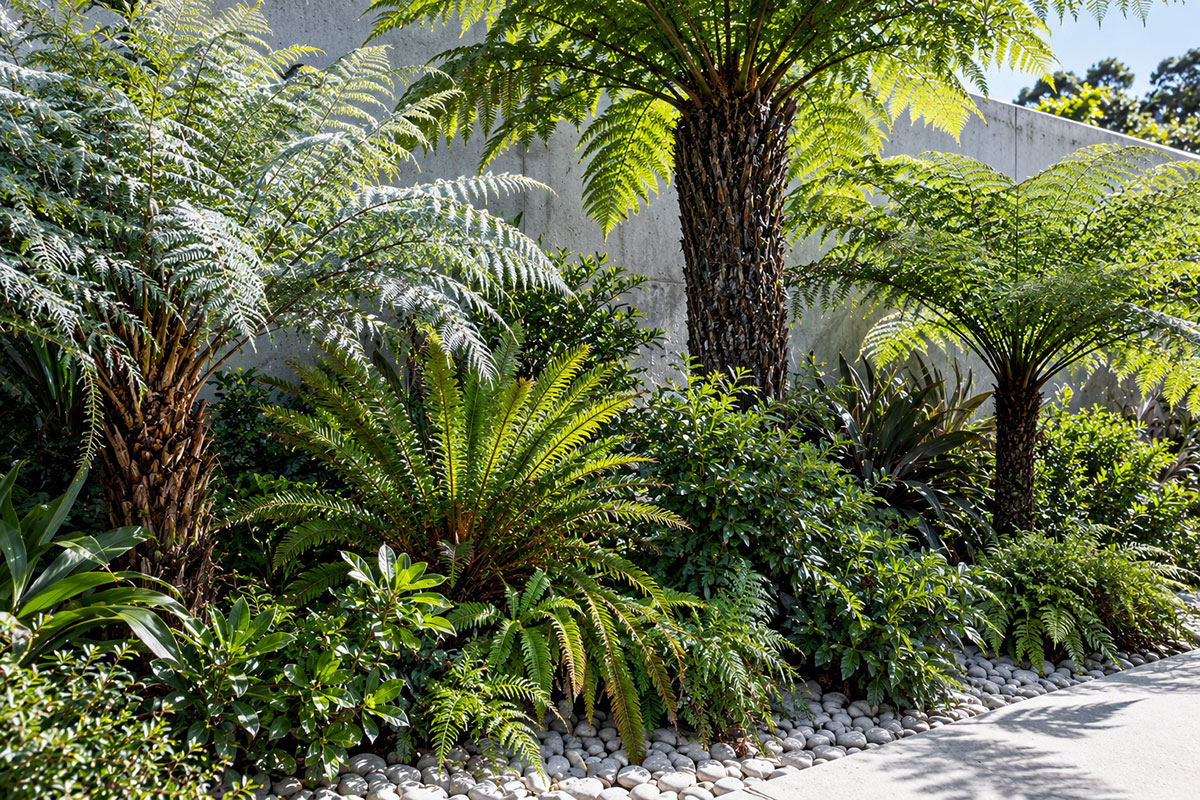
Selecting the Best Native Tree Ferns NZ
There are several distinct species of native tree ferns nz, each with different visual characteristics and environmental tolerances. Choosing the right genus and species for your specific microclimate is the first step to success.
1. Silver Fern (Cyathea dealbata)
The national emblem of New Zealand. It features fronds that are green on top and striking silvery-white underneath. If you are growing silver ferns, place them in a sheltered spot with dappled light. They are relatively tolerant of dry periods once established but absolutely despise strong winds, which shred their delicate fronds.
2. Wheki (Dicksonia squarrosa)
The most common and resilient tree fern in cultivation. It has a slender, dark brown trunk and a somewhat harsh, bristly appearance. It naturally sends up new baby ferns (pups) from its root system, eventually forming a dense grove. Proper wheki fern care is forgiving; it can tolerate more sun and wind than other varieties, provided its roots are kept consistently moist.
3. Mamaku / Black Tree Fern (Cyathea medullaris)
The giant of the New Zealand forest. Mamaku can grow over 20 metres tall in the wild and features massive, arching fronds and striking black, hexagonal scars on the trunk. It grows extremely fast but is highly frost-tender when young and requires huge amounts of space and water.
4. Soft Tree Fern / Katote (Cyathea smithii)
Easily identified by the skirt of dead brown fronds hanging flat against its pale trunk. This species requires deep shade, very high humidity, and constant moisture. It is best suited for southern or alpine gardens, as it is incredibly cold-hardy but will perish quickly in a hot, dry Auckland summer.
Essential Ponga Tree Care: Placement and Watering
To keep your tree ferns thriving rather than just surviving, mimic their natural forest habitat.
- Canopy and Shade: Always plant pongas under the dappled shade of established canopy trees or on the south side of a building. They need shelter from the harsh midday sun and drying winds.
- How to Water a Ponga: Because the trunk is made of aerial roots, watering the ground is not enough. You must water the trunk. During dry summer spells, set your hose to a gentle shower and soak the entire trunk from the crown (the top where the fronds emerge) right down to the base. Doing this twice a week in summer is vital for a healthy fern.
- Soil and Mulch: Tree ferns require rich, humus-heavy, well-draining soil. Never plant them in bare dirt. Recreate a forest floor by applying a very thick layer (10-15cm) of leaf mould, bark, or compost around the base to lock in ground moisture and keep the soil cool.
- Feeding: Avoid harsh synthetic fertilisers. Tree ferns evolved in low-nutrient environments. A light application of blood and bone or a diluted liquid seaweed tonic poured directly over the crown and trunk in spring is all they need.
Planting Harvested Ponga Logs
Often, you will find rootless “ponga logs” for sale in garden centres (usually Dicksonia squarrosa). To successfully strike a ponga log, bury the bottom third of the trunk firmly in the soil to keep it stable. You must soak the entire log with water every single day for the first few months until new fronds emerge and it establishes a new root system in the ground. Staking the log firmly will prevent the wind from rocking it and snapping the fragile new subterranean roots.