
Best NZ Native Groundcovers to Stop Weeds
Best NZ Native Groundcovers for modern, eco-conscious gardeners, the days of relying on chemical weedkillers like glyphosate are fading. Instead, the most sustainable and visually appealing way to conquer bare dirt, steep banks, and empty borders is to let nature do the heavy lifting. By utilizing nz native ground covers, you can create a dense, living mulch that outcompetes weeds for light, water, and nutrients.
If you want to ditch the sprays and are looking for the best native plants to suppress weeds nz, this guide covers the most robust, low-maintenance options perfectly adapted to our local climate.
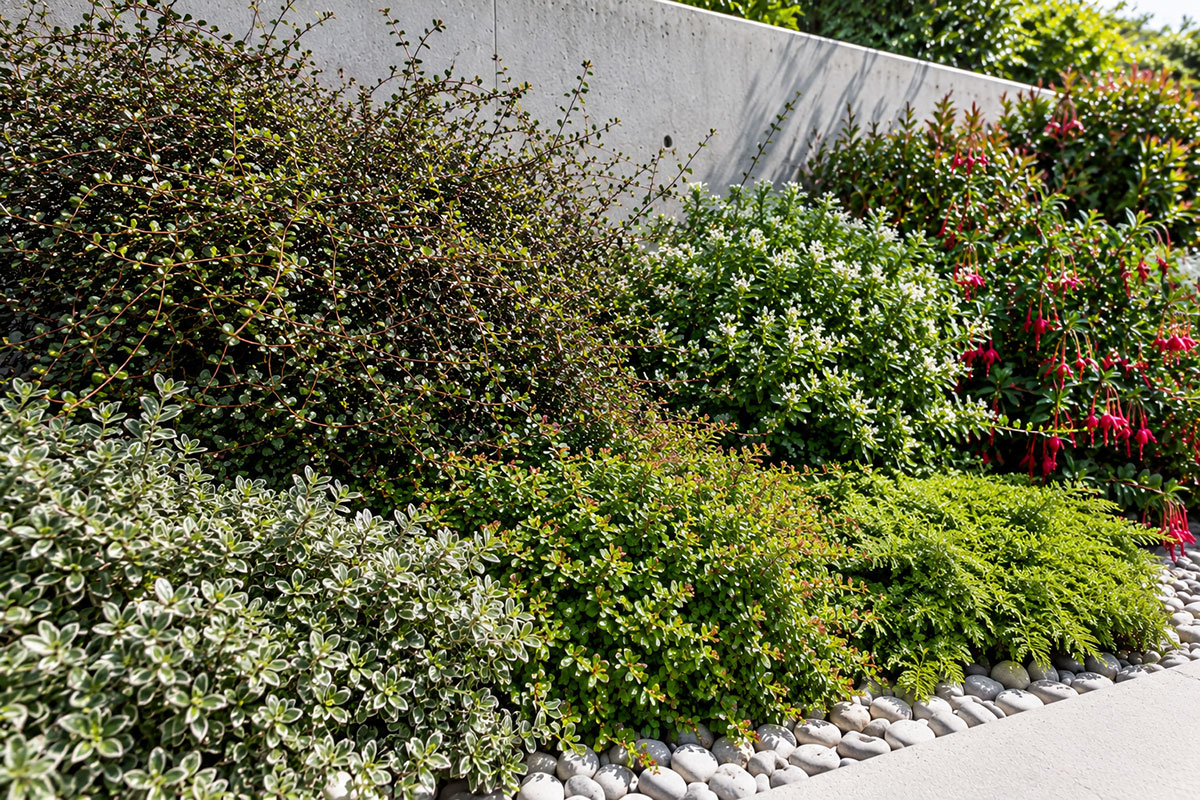
How Native Groundcovers Work
To effectively stop weeds, a groundcover must form a tight, interwoven mat across the soil surface, preventing weed seeds from germinating. While they establish, they require a bit of manual weeding and a thick layer of organic mulch. However, once their foliage knits together, they transform into exceptional low maintenance ground cover plants nz that protect the soil from erosion—making them particularly vital for steep, hard-to-mow banks.
The Best Native Genera and Species for Weed Suppression
1. Coprosma (Creeping Varieties)
While often known as shrubs, creeping Coprosmas are arguably some of the toughest groundcovers for dry banks, coastal areas, and poor soils. Their sprawling, wiry stems weave together to form an impenetrable, bouncy mattress.
- Best Varieties: Coprosma hawera (very tight, small green leaves) and Coprosma acerosa ‘Taiko’ (darker, sprawling, excellent for trailing over retaining walls).
- Cultural Info: Thrives in full sun and thrives on neglect. Highly drought and wind tolerant.
2. Muehlenbeckia (Muehlenbeckia axillaris)
Also known as creeping pohuehue, this plant forms a dense, wiry mat of tiny dark green leaves. It is incredibly vigorous and will quickly swallow up bare ground, suppressing even persistent weeds.
- Cultural Info: Handles full sun to part shade and can even tolerate light foot traffic. It is cold-hardy and supports native butterflies (like the Copper butterfly).
3. Acaena (Bidibidi)
Acaena forms a soft, textured carpet that looks fantastic contrasting against green foliage or modern concrete paths.
- Best Variety: Acaena inermis ‘Purpurea’. Unlike the wild bidibidi that gets stuck to your socks, this variety is thornless and boasts stunning, deep purple/bronze foliage.
- Cultural Info: Prefers well-drained soil in full sun. It can struggle in humid, waterlogged environments, so ensure good airflow.
4. Pimelea (Pimelea prostrata)
Commonly known as New Zealand Daphne, this elegant groundcover offers soft, blue-grey foliage and tiny, fragrant white flowers in spring and summer.
- Cultural Info: It requires excellent drainage and full sun. It is a fantastic choice for alpine gardens, rockeries, or draping gracefully over the edges of raised planter boxes.
5. Fuchsia (Fuchsia procumbens)
One of the most unique groundcovers in the world, the creeping tree fuchsia drops its leaves in cold winters but provides a lush, bright green mat during the warmer months, dotted with bizarre, upward-facing colorful flowers and large red berries.
- Cultural Info: Unlike Coprosma, creeping Fuchsia prefers a bit of moisture and part shade, making it ideal for suppressing weeds under the canopy of larger trees.
6. Leptinella (Leptinella squalida)
If you have damp, shady areas where grass refuses to grow and weeds take over, Leptinella is a lifesaver. It forms a soft, fern-like carpet that looks almost like a miniature forest floor.
- Best Variety: ‘Platt’s Black’ offers striking bronze-black, feathery foliage.
- Cultural Info: Perfect for planting between stepping stones or in damp, shaded borders. It handles foot traffic very well.
Tips for Establishing NZ Native Groundcovers Successfully
The secret to using plants as weed control is planting density. If you space your plants too far apart to save money, weeds will establish in the gaps before the groundcovers can connect.
- Spacing: Plant smaller grades (like 10cm pots or root trainers) close together—usually 3 to 5 plants per square metre, depending on the variety’s spread.
- Mulch First: Before planting, clear the area of existing perennial weeds (like kikuyu or bindweed). Apply a 5-10cm layer of weed-free bark mulch, and plant your groundcovers directly through it. The mulch stops weeds while the plants grow.
- Initial Care: For the first 6 to 12 months, you must diligently hand-pull any weeds that pop through the mulch. Once the native plants knit together into a solid canopy, your weeding duties will reduce.