
Coastal Gardening NZ: Tough Plants That Tolerate Salt and Wind
Coastal Plants NZ – Living by the beach is the ultimate Kiwi dream, but coastline properties deal with harsh conditions where more tender garden center plants quickly burn out. Between the abrasive salt spray, gale-force winds, and sandy soils that drain water rapidly, successful coastal gardening nz style requires a specific, resilient plant palette. By choosing native species that have evolved on our rugged coastlines, you can create a lush, thriving garden that actually protects your property and can give you some shelter.
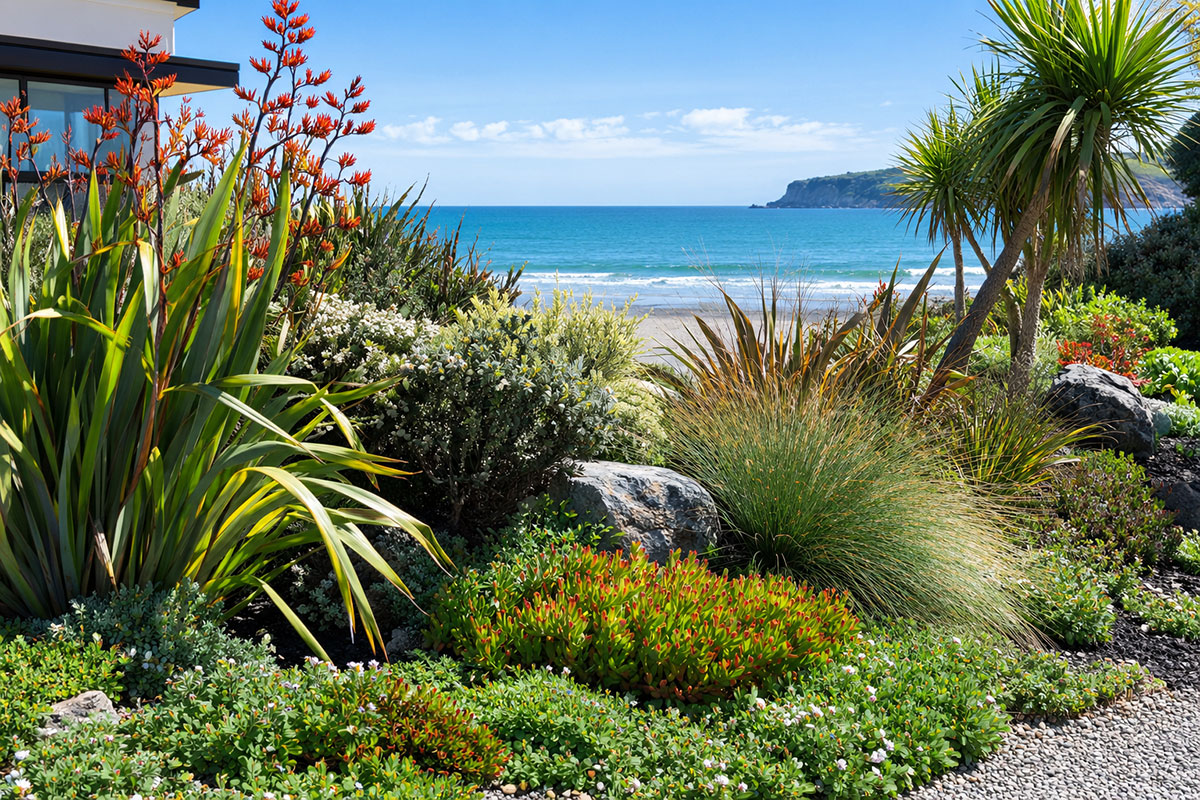
The Challenges of the Coast
Before planting, it helps to understand what you are up against. Coastal gardens generally face three main hurdles:
- Salt Spray: Salt settles on leaves and draws moisture out, causing leaf burn. You need plants with tough, waxy, or hairy leaves that can deflect or tolerate salt.
- Strong Winds: Relentless wind can uproot shallow plants and snap brittle branches. Wind resistant plants nz gardeners rely on tend to be flexible and deeply rooted.
- Sandy Soils: Coastal soil often lacks organic matter and drains too fast. Identifying genuine sand tolerant plants nz species is crucial for establishing ground cover.
Best Coastal Plants NZ: Genus, Species, and Varieties
To establish a garden in these extremes, you need to plant in “zones.” Use the toughest plants on the seaward boundary to act as a windbreak, which will create a sheltered microclimate behind them for slightly more delicate plants.
1. The Frontline (Trees and Large Shrubs)
- Pōhutukawa (Metrosideros excelsa): The quintessential New Zealand Christmas tree. It is incredibly wind and salt resistant, and its aerial roots help it cling to precarious coastal cliffs.
- Taupata / Mirror Bush (Coprosma repens): Famous for its extremely glossy, fleshy leaves that literally deflect salt spray. It can be left as a sprawling coastal shrub or clipped into a dense, wind-proof hedge.
- Kapuka / Broadleaf (Griselinia littoralis): An excellent, fast-growing option for coastal hedging. Its thick, apple-green leaves handle wind beautifully, though it prefers to be slightly behind the immediate frontline.
2. Structural Windbreaks (Flaxes and Grasses)
- Harakeke / NZ Flax (Phormium tenax) & Wharariki (Phormium cookianum): Flaxes are the backbone of coastal landscaping. They provide quick shelter for smaller plants, attract tūī and bellbirds, and their flexible blades withstand howling gales.
- Coastal Astelia (Astelia banksii): A striking, silvery-green structural plant that thrives in dry, sandy soils and tolerates coastal winds perfectly.
3. Groundcovers and Sand Binders
- Pōhuehue (Muehlenbeckia complexa): A phenomenal, wiry groundcover that forms dense, bouncy mats. It is brilliant for binding loose soil and scrambling over coastal rocks.
- Pīngao (Ficinia spiralis): The golden sand sedge. If your property backs onto actual dunes, Pīngao is an essential sand-binding grass that traps blowing sand and stabilizes the environment.
- NZ Daphne (Pimelea prostrata): A beautiful, sprawling native groundcover that produces highly fragrant white flowers and loves well-drained, sandy spots.
General Cultural Information & Care Tips
Even the toughest coastal plants nz has to offer need a little help getting established. Follow these tips to ensure your coastal garden thrives:
- Establish Shelter First: Plant your hardiest boundary hedges and flaxes first. Wait a season or two for them to establish before planting more sensitive plants in the newly created shelter.
- Improve the Soil: Sandy soil leaches nutrients quickly. When planting, dig a hole twice the size of the pot and backfill it with a mixture of compost, sheep pellets, and the native sand. Mulch heavily to retain moisture.
- Plant in Autumn: The best time to plant a coastal garden is early autumn. This allows the plants to establish a strong root system over the wet, cool winter before they have to face the brutal, dry coastal summer.
- Staking is Essential: Because of the wind, stake new trees to reduce “wind rock,” which damages establishing roots. Ensure stakes are driven deeply into the sand. Also staple wind cloth to the windward side of the staked plant for shelter while establishing.
By working with nature rather than against it, and selecting the rugged plants that naturally call the shoreline home, your coastal garden will become a beautiful, resilient haven.