
How to Conquer and Fix Heavy Clay Soil to Establish a Vegetable Or Ornamental Garden
How To Fix Clay Soil NZ – Massive chunks of Auckland, Northland, and parts of Wellington are plagued by sticky, suffocating clay. In winter, it turns into a waterlogged bog that rots vegetable roots; in summer, it bakes into concrete that stops root crops dead in their tracks. However, improving clay soil auckland and beyond to establish a productive vegetable patch is entirely possible. With the right strategy, you can transform heavy clay into a rich, friable loam perfect for growing your own food.
The Best Soil Additives for Breaking Up Clay Soil
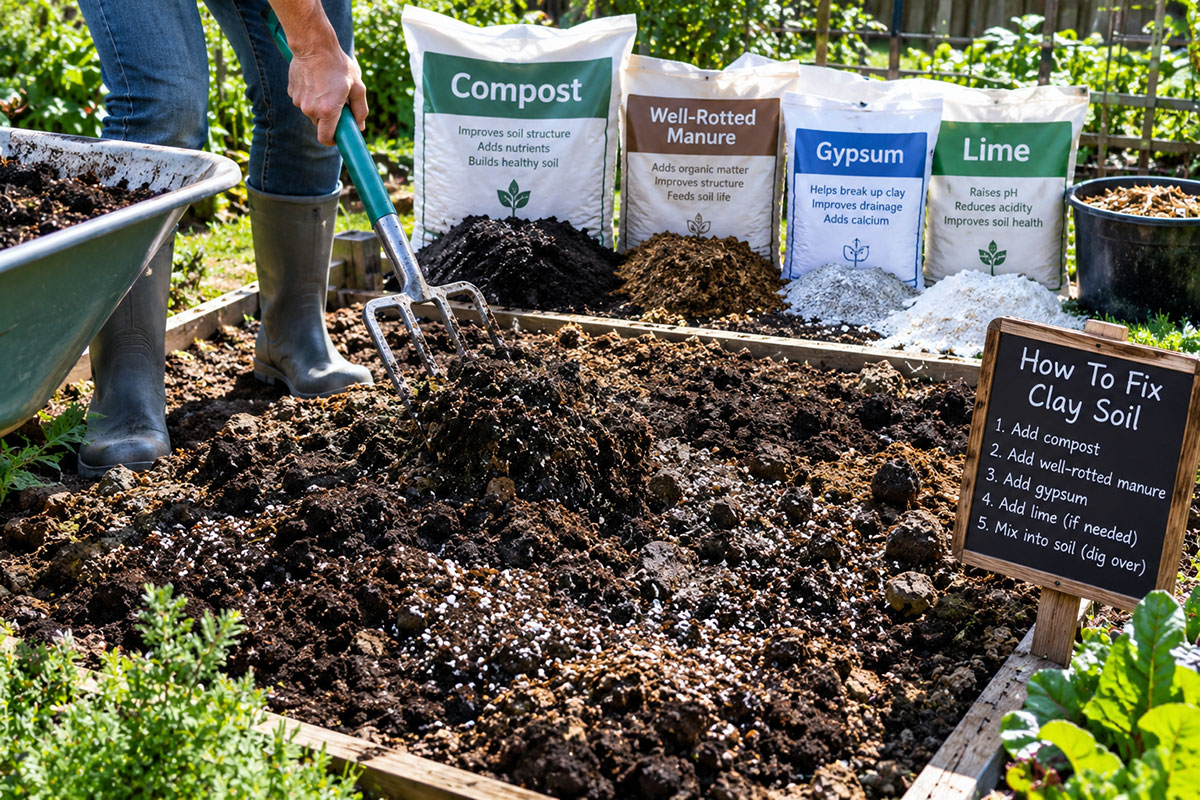
You cannot simply dig clay once and expect your plants to thrive. Knowing how to fix clay soil nz relies on fundamentally changing its structure before planting your edibles:
- Gypsum (Clay Breaker): This is your secret weapon for the veggie patch. Gypsum is a naturally occurring mineral (calcium sulfate) that works on a chemical level to bind tiny clay particles together into larger crumbs. This creates vital air pockets for vegetable roots and instantly improves drainage without altering the soil’s pH (which is great because most veggies prefer a neutral pH).
- Organic Matter (Compost and Sheep Pellets): Organic matter is the long-term cure for clay and the primary food source for your vegetables. Bulky organic materials feed earthworms, which literally tunnel through the clay and do the heavy lifting of aerating it for you.
- Pumice or Coarse Sand: Adding a coarse aggregate like horticultural pumice physically separates clay particles. Warning: Never use fine beach sand. Mixing fine sand with heavy clay creates a substance resembling concrete. Always use large, coarse grit.
How to Prepare Your Vegetable Beds
Throwing additives on top of rock-hard clay won’t achieve much. You need to incorporate them properly to kickstart the breakdown process before sowing seeds:
- Wait for the Right Weather: Never dig clay when it is soaking wet (you will destroy its structure) or bone dry (you will break your spade). Wait for a few dry days after rain when the soil is damp but crumbly.
- Apply the Gypsum: Spread gypsum generously over the surface of your future vegetable beds. Follow the application rates on the bag, but for heavy New Zealand clay, it is hard to overdo it.
- Layer the Organic Matter: Pile at least 10–15cm of high-quality vegetable compost, aged animal manure, and sheep pellets on top of the gypsum.
- Dig it In (Roughly): Use a strong garden fork to roughly turn the soil over to a depth of about 20-30cm. You do not need to blend it into a fine powder; rough clods are fine.
- Form Raised Mounds: For vegetable gardens in clay, always mound the soil up slightly rather than planting on flat ground. This ensures excess winter rain drains away from the root zone of your crops.
The Alternative: Raised Garden Beds
If digging through solid clay sounds too daunting, the most popular and productive method for establishing a vegetable garden on heavy clay in New Zealand is to build raised beds.
Building timber frames or using natural stone or precast concrete retaining wall blocks. Then importing quality vegetable mix allows you to bypass the native clay entirely. The clay underneath will naturally improve over time as worms pull the rich organic matter down from your raised beds into the original soil.
Best Edible Plants for Clay Soil NZ
While you wait for your soil structure to improve, you can still plant successfully. Avoid deep root crops like carrots and parsnips in the first year (they will fork and struggle in heavy clay). Instead, choose these resilient edibles:
- Leafy Greens: Lettuces, spinach, and silverbeet have shallow root systems and will thrive in the rich, composted top layer of your improved clay.
- Brassicas: Cabbages, broccoli, and kale are sturdy and often appreciate the firm anchorage that heavy soils provide, provided they aren’t sitting in winter puddles.
- Pumpkins and Squash: These trailing plants do well on clay mounds, as their shallow roots spread wide rather than deep.
- Potatoes: Growing potatoes in mounds of compost on top of broken-up clay is a fantastic way to further break down the soil. As you harvest the potatoes, you naturally turn and aerate the soil!
Best Ornamental Native Plants for Clay Soil NZ
While you wait for your soil structure to improve, you can still plant successfully. Many native plants for clay soil nz have evolved to tolerate these exact heavy, boggy winter conditions:
- Harakeke (NZ Flax): Incredibly tough and happy in heavy, damp soils.
- Tī Kōuka (Cabbage Tree): Thrives in poor drainage and helps draw water out of the soil.
- Mānuka (Leptospermum scoparium): A pioneer plant that will happily grow in poor, heavy clay while providing beautiful flowers for bees.
- Pūpūrangi / Renga Renga Lily: A great understory plant that handles heavy soils surprisingly well if on a slight slope.
Remember, fixing clay is a marathon, not a sprint. Keep layering compost on the surface every season after you harvest your vegetables, and your soil will become richer and more productive year after year.