
Volcanic Soil Gardening Guide: What to Plant and How to Fertilise
If you live in Taranaki, parts of Auckland, or the Central Plateau, you are likely gardening in “Allophanic” or volcanic ash soils. Often referred to as volcanic loam, this soil is famous for its beautiful, dark, crumbly texture. However, gardening in volcanic soil comes with a unique set of rules: while it drains quickly and is easy to dig, it can dry out incredibly fast in summer and has a frustrating habit of locking away essential nutrients.
Understanding Volcanic Loam Gardening
Volcanic soil is a double-edged sword. On one hand, its physical structure is almost perfect. It is highly porous, meaning plant roots can easily push through it, and it never suffers from the waterlogging issues that plague heavy clay. On the other hand, it has a high “Phosphorus Retention” (P-retention) rate. This means the soil chemically grabs onto phosphorus (a vital nutrient for root development and flowering) and refuses to release it to your plants.
How to Enrich Volcanic Soil NZ: The Fertiliser Strategy
To successfully enrich volcanic soil nz style, you cannot just rely on standard all-purpose fertilisers. You need a targeted approach to ensure your plants actually get the food they need:
- Superphosphate is Your Friend: Because volcanic soil locks up phosphorus, you need to apply it in a highly available form. Adding superphosphate (or heavy applications of bone dust for organic gardeners) in early spring is essential for strong root growth and abundant flowers.
- Organic Matter is Crucial: Volcanic soils are notoriously “hungry” and drain so quickly that they leach out water-soluble nutrients (like nitrogen). Digging in significant amounts of compost, sheep pellets, and well-rotted manure acts as a sponge, holding moisture and nutrients in the root zone before they wash away.
- Don’t Forget Trace Elements: Depending on the exact age of the volcanic ash, these soils can be deficient in trace minerals like magnesium and cobalt. An annual application of Epsom salts (for magnesium) or a comprehensive trace-element seaweed tonic will keep foliage lush and green.
Best Volcanic Soil Plants: Genus, Species, and Varieties
The secret to thriving in volcanic loam is choosing plants that love free-draining conditions and despise “wet feet.”
1. Edibles that Excel
- Avocados (Persea americana): Avocados absolutely despise heavy, wet soil. The instant drainage of volcanic soil makes it the ultimate environment for them (particularly the ‘Hass’ and ‘Reed’ varieties), provided they are fed heavily with nitrogen and phosphorus.
- Root Vegetables: Carrots, parsnips, and kūmara thrive here. Because the soil is so friable and loose, root crops can push down deeply without forking or hitting hard pans.
- Citrus (Citrus species): Lemons, limes, and mandarins do brilliantly in the drainage provided by volcanic soil, but they will need regular, heavy feeding with citrus-specific fertiliser to prevent yellowing leaves.
2. Ornamentals and Natives
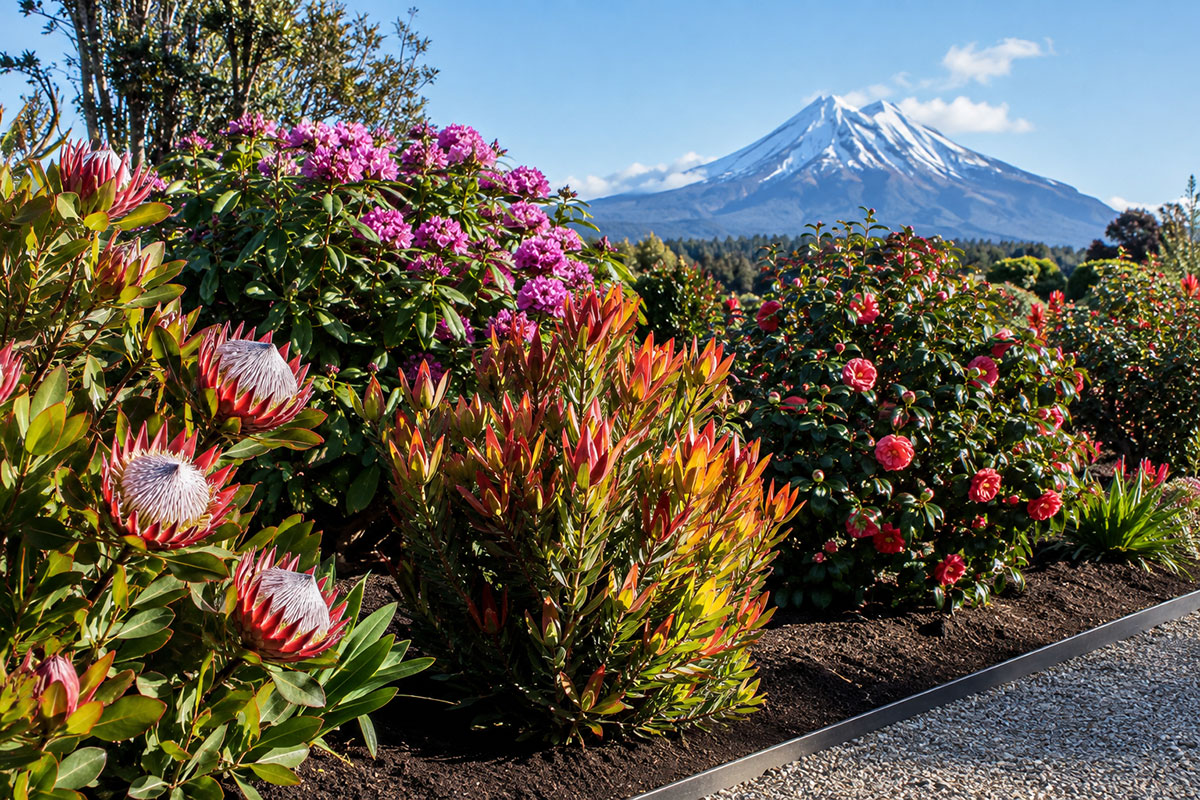
- Proteas and Leucadendrons: These South African natives have evolved in nutrient-poor, incredibly free-draining soils. They thrive in volcanic environments where rich, heavy soils would normally kill them.
- Pseudopanax (Lancewood / Five Finger): These architectural natives love the free-draining nature of volcanic ash and establish very deep, secure root systems.
- Rhododendrons and Camellias: Particularly popular in Taranaki gardens, these acid-loving plants thrive in the naturally slightly acidic, rich, friable topsoil of volcanic regions, provided they are mulched heavily to keep their shallow roots cool and moist in summer.
General Cultural Care: The Importance of Mulch
Because this soil drains like a sieve, summer droughts can be devastating. The most critical cultural practice for volcanic loam gardening is mulching. Apply a thick (5-10cm) layer of bark, woodchip, or pea straw over your garden beds every late spring. This traps the winter moisture in the soil, prevents the sun from baking the surface, and slowly breaks down to add that desperately needed organic matter back into the earth.
By feeding heavily, mulching deeply, and choosing plants that love to keep their feet dry, your volcanic soil will reward you with one of the most productive, easy-to-dig gardens in the country.