
Guava Moth Control: Protecting Your Citrus and Stonefruit
There is nothing quite as heartbreaking for a northern New Zealand gardener as picking a flawless, perfectly ripe piece of fruit, only to cut it open and find a brown, rotting, excrement-filled mess inside. If this is happening to your crops, or you find yourself wondering what is eating my macadamias nz, you have likely been invaded by the Australian Guava Moth (Coscinoptycha improbana). This introduced pest is wreaking havoc across Northland, Auckland, and parts of the Waikato, and requires serious intervention to protect your harvest.
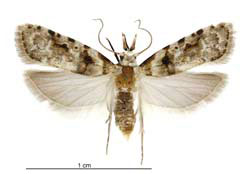
The Damage: What Are You Looking For?
Unlike many pests that leave obvious bite marks on the outside, the guava moth is a stealth attacker. The adult moth lays her eggs on the surface of the fruit. When the tiny pinkish caterpillar hatches, it immediately bores a microscopic pin-prick hole through the skin and directly into the flesh.
Once inside, it feeds on the fruit and seeds, leaving behind brown, mushy tunnels filled with frass (caterpillar waste). The entry hole is so small it often heals over, meaning the fruit looks completely fine on the outside while rotting from the inside out. They attack a wide range of crops, including citrus (mandarins, lemons), macadamias, feijoas, stone fruit (peaches, plums), pome fruit (apples, pears), and even nashi pears. Nuts: Macadamia nuts.
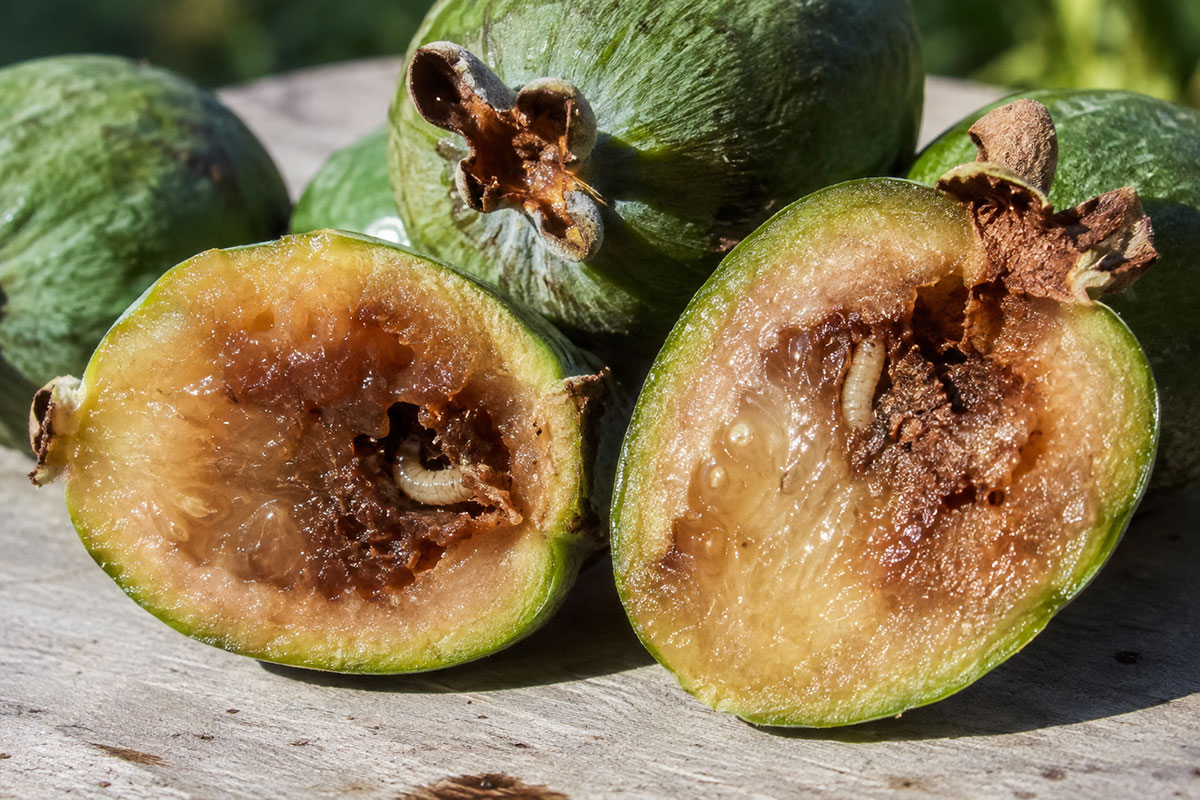
The Relentless Life Cycle
The primary reason guava moth control is so incredibly difficult is because of its life cycle. Unlike the codling moth (which goes dormant in winter), the guava moth thrives year-round in the warm northern New Zealand climate.
- Continuous Breeding (All 12 Months): Because northern NZ gardens provide a continuous buffet of fruiting trees across different seasons (stonefruit in summer, feijoas in autumn, citrus and macadamias in winter/spring), the moth simply hops from one tree to the next.
- The Stages: The caterpillar feeds inside the fruit for several weeks. Once mature, it either drops to the ground to pupate in the leaf litter or pupates inside the rotting fruit itself. Within a couple of weeks, a new adult moth emerges to start the cycle again.
How to Treat and Control Guava Moth
Because the caterpillar spends almost its entire life safely shielded inside the fruit, chemical sprays are notoriously ineffective. A successful guava moth nz defense relies heavily on prevention and breaking the cycle.
1. Pheromone Traps (The First Line of Defense)
Setting up guava moth traps nz is crucial. These sticky traps use a pheromone lure that mimics the scent of a female moth, drawing in and trapping the males to stop them from mating.
- Hang the traps in your fruit trees as soon as the fruit sets (when the blossoms drop off).
- Replace the pheromone lure every 4 to 6 weeks.
- Note: Traps alone will not eliminate a heavy infestation, but they drastically reduce numbers and act as an early warning system.
2. Exclusion Bagging (The Most Effective Method)
For home gardeners, the absolute best way to guarantee a clean harvest is physical exclusion. Once your fruit has set and is about the size of a marble, cover the fruit clusters or even the entire small tree with fine, UV-resistant exclusion mesh (often sold as “guava moth netting”). If the moth cannot physically land on the fruit, she cannot lay her eggs.
3. Ruthless Orchard Hygiene
You must break the life cycle by removing their breeding grounds.
- Pick up fallen fruit daily: Never leave rotting fruit under the tree.
- Destroy infected fruit: Do not just throw infected fruit into the compost bin! The caterpillars will simply hatch out of the compost. You must freeze the infected fruit for 48 hours, boil it, or seal it in a black plastic bag in the hot sun for a week before throwing it away.
4. Chemical Control
If you choose to use insecticides (like Neem oil or Spinetoram-based sprays), you must spray aggressively during the short window between when the egg hatches and the caterpillar bores into the fruit. Because the moths breed continuously all year, this requires spraying every 7 to 14 days from fruit set until harvest, which is why physical bagging is usually preferred by home gardeners.
By combining pheromone traps with ruthless orchard hygiene and mesh bags, you can outsmart this devastating pest and enjoy clean, delicious fruit once again.
Go To Best gardens to visit in Auckland From Guava Moth NZ
Go To Gardening NZ Home Page From Guava Moth NZ
Attribution – credits/resources used on this page include-
Landcare Research New Zealand Ltd, CC BY 4.0