
Shady Garden Solutions: Best Plants for Deep Shade in NZ
Suburban gardens across New Zealand often come with a common landscaping headache: dark, damp patches under established canopy trees, or narrow, sunless corridors between close-standing houses. However, these spaces don’t have to remain bare dirt or mossy wastelands. By selecting the right shade loving plants nz has to offer, you can transform the gloomiest corners of your property into lush, tranquil woodland retreats.
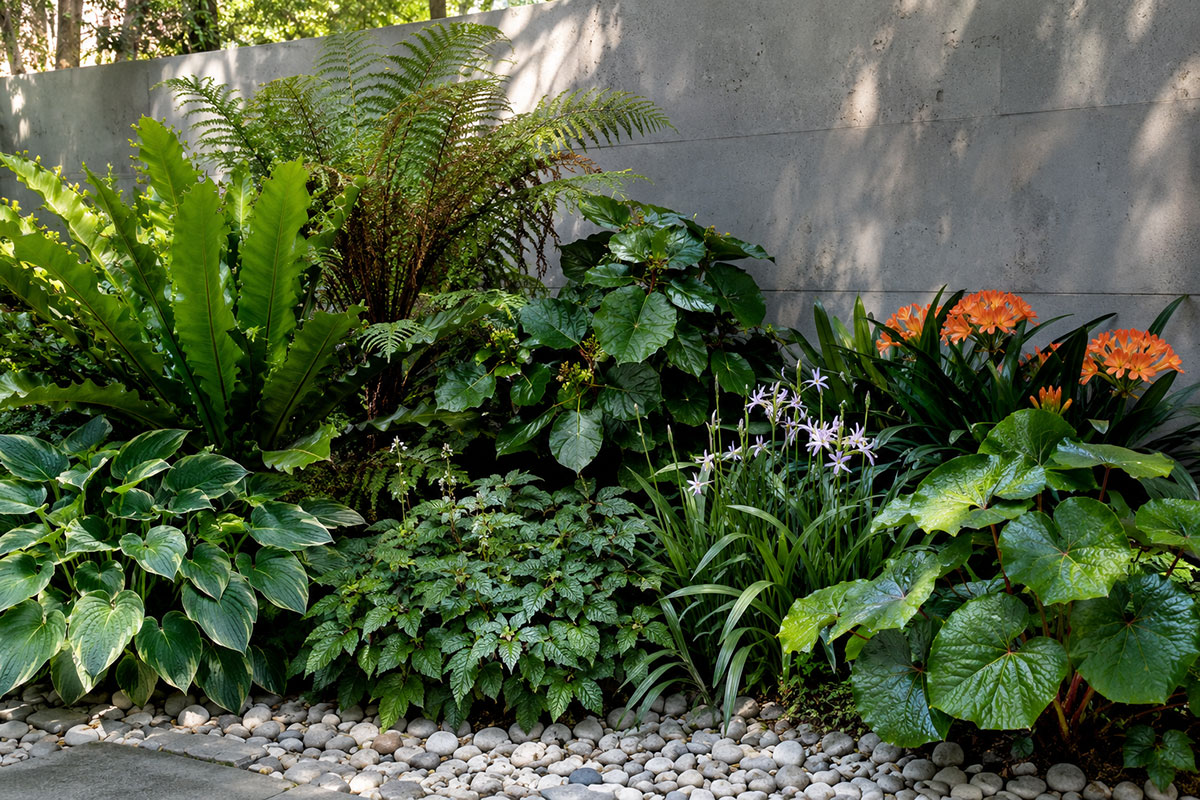
Damp Shade vs. Dry Shade: Know Your Space
Before planting, you must identify whether your shady spot is wet or dry. This is the single most important factor for success when choosing the best plants for deep shade nz:
- Damp Shade: Typically found on the south side of a house or low-lying areas that receive no direct sun but hold onto rainfall. The soil is usually cool and moist.
- Dry Shade: Found under the canopy of large established trees (like mature pines, oaks, or pōhutukawa). The tree canopy acts like an umbrella, blocking rain, while the massive tree roots suck every drop of moisture out of the soil. This requires incredibly tough dry shade plants nz species.
Best Native Plants for Shade NZ
New Zealand’s forests are naturally dense, meaning many of our native plants have evolved as understory species perfectly adapted to low light.
Ferns (Perfect for Damp Shade)
- Hen and Chickens Fern (Asplenium bulbiferum): A soft, incredibly lush fern that produces tiny plantlets on its fronds. It thrives in damp, dark, sheltered spots and adds instant woodland texture.
- Crown Fern (Blechnum discolor): Forms a highly structural, vibrant green crown. It looks spectacular mass-planted under the dappled shade of larger trees.
Shrubs and Groundcovers
- Kawakawa (Piper excelsum): This medicinal native shrub naturally grows in the forest understory. Its large, heart-shaped leaves provide a stunning tropical look in deep shade.
- Parataniwha (Elatostema rugosum): An absolute must for wet, dark areas (like beside a shady stream). Its large, bronze-green leaves create a dramatic, weed-suppressing groundcover.
- Renga Renga Lily (Arthropodium cirratum): One of the absolute best dry shade plants nz has to offer. Once established, it tolerates the root competition under large trees and brightens dark spaces with starry white flowers in spring.
Top Exotic Performers for Shade
If you want to mix in some color, these reliable exotics pair beautifully with New Zealand natives in shady conditions:
- Clivia (Clivia miniata): Indestructible and perfectly suited for dry shade under mature trees. They require almost no maintenance and reward you with vibrant orange or yellow blooms in early spring.
- Hostas: Ideal for damp shade. Their massive, beautifully patterned leaves add incredible texture, though you must protect them from slugs and snails during wet weather.
- Tractor Seat Plant (Ligularia reniformis): Famous for its massive, glossy, kidney-shaped leaves. It looks incredibly modern and architectural but requires a damp, shady spot to stop its large leaves from wilting.
Brightening the Shadows: Light-Colored Foliage Plants for Shade
When dealing with deep shade, relying entirely on dark green native ferns can sometimes make the space feel even smaller and gloomier. The landscaping secret to making a shady garden “pop” is introducing light-colored foliage. Plants with white, silver, or highly variegated leaves act like natural reflectors, catching whatever ambient light is available and illuminating the dark corners of your garden.
Here are some of the best shade-tolerant, bright-foliage plants that perform beautifully in New Zealand conditions:
Silver & Frosted Foliage
- Siberian Bugloss (Brunnera macrophylla ‘Jack Frost’): This is a must-have for damp shade. It produces large, heart-shaped leaves that are heavily frosted with brilliant silver, leaving only the dark green veins visible. In spring, it sends up delicate sprays of bright blue, forget-me-not-like flowers.
- Spotted Dead Nettle (Lamium maculatum ‘Beacon Silver’): A fantastic, fast-spreading groundcover that carpets the ground in metallic silver leaves with a narrow green margin. It easily tolerates dry shade once established and produces small pink or white flowers.
- Japanese Aralia (Fatsia japonica ‘Spider’s Web’): If you want a tropical, architectural look in deep shade, this is it. It features massive, hand-shaped leaves that look as though they have been heavily dusted with white icing sugar or wrapped in a white spider web. It handles dry shade exceptionally well.
White & Cream Variegation
- Variegated Hostas (e.g., ‘Patriot’ or ‘Francee’): Hostas are the kings of the shade garden. Varieties with crisp white or cream margins boldly stand out against dark soil. Note: They require damp shade and strict snail/slug protection in NZ!
- Variegated Japanese Sedge (Carex oshimensis ‘Evergold’): A tough, clumping ornamental grass with a creamy-yellow center stripe on every blade. It cascades beautifully over the edges of raised beds or pots and handles dappled or partial shade brilliantly.
- Variegated Mirror Bush (Coprosma repens ‘Marble Queen’): For a tough, native-derived shrub, this Coprosma features extremely glossy leaves heavily speckled and margined with creamy white. While it prefers part-sun, it handles dappled woodland shade well and reflects a tremendous amount of light.
Design Tips for Light Foliage
- Mass Planting: A single silver plant can look lost. Plant them in drifts or groups of three to five to create a bold “pool” of light on the forest floor.
- Contrast is Key: Pair these bright plants directly next to dark green or purple foliage (like a dark Heuchera or a Black Tree Fern). The sharp contrast makes the white and silver appear even brighter.
General Cultural Information: Prepping for Success
Shade plants are generally grown for their foliage, which means they rely heavily on soil health to look their best.
- Enrich the Soil: Whether dealing with damp or dry shade, organic matter is the solution. Dig generous amounts of compost, leaf mould, and sheep pellets into the soil before planting. This helps dry soil retain moisture and helps damp soil drain better.
- Water Deeply While Establishing: Even if a plant is categorized as a “dry shade” survivor (like Clivia or Renga Renga), it still needs regular, deep watering for its first year to establish a root system capable of competing with nearby trees.
- Use Light-Colored Foliage: Dark green plants can disappear in deep shade. To make the space pop, incorporate plants with white, silver, or variegated foliage to reflect the ambient light.
Embrace the shade! By matching the right plant to your soil moisture levels, the darkest parts of your garden can easily become your favorite feature.